Cultivation
Indoor vs outdoor growing: which setup fits your space?
Indoor buys control, outdoor buys free light. An honest comparison of cost, effort, yield and risk so you pick the setup your space can actually support.
Every grower answers the same question first, usually without realising it: inside or outside? The answer shapes everything downstream, from which seed type to buy to how much electricity, water and attention the run will demand. Both routes produce excellent harvests and both punish the wrong expectations. This guide compares them honestly across the dimensions that actually decide success: control, cost, effort, yield and risk.
Indoor: control at a cost
Growing indoors means you play the weather. Light hours, temperature, humidity and airflow all answer to you, so harvests arrive year-round and look consistent from run to run. Photoperiod plants in particular reward indoor growers, because the 12-hour night that triggers flowering is yours to schedule. The price is equipment and electricity: a tent, a decent LED, ventilation with a carbon filter, plus the monthly power bill. Small mistakes are cheap indoors because you have time and tools to correct them, but the setup cost means the first harvest is never really free.
Outdoor: free light, real weather
The sun is a better lamp than anything you can buy, and it sends no bill. Outdoor plants grow bigger than their indoor siblings almost by default, with root space and full-spectrum light no tent can match. The tradeoff is exposure: rain near harvest invites mould, a cold snap stalls growth, pests arrive uninvited, and the season sets a hard deadline your plants cannot negotiate. Autoflowers suit short northern summers because they finish by age; photoperiod plants need a long, warm autumn to ripen fully. Where you live decides more outdoors than any technique does.
Indoor growers fight their equipment. Outdoor growers fight the calendar. Pick the fight you are better equipped to win.
The questions that decide it
- What is legal where you live? In many countries any cultivation is illegal regardless of location, and in some legal markets only indoor or only licensed outdoor growing is allowed. Check our legal status by country page before spending a euro.
- How much space is truly yours? A spare room or a garage with power favours a tent. A private, sunny, overlooked-by-no-one garden favours pots outdoors. A shared balcony visible from the street favours neither.
- What is your budget and patience? A minimum viable tent setup costs real money up front and pays back over runs. Outdoor costs little beyond soil and pots but gives you one shot per year in most of Europe.
- How much daily attention can you give? Indoor plants want checking most days. Outdoor plants in soil forgive a missed day but demand close watching in late flowering when mould moves fast.
If you go indoor: the minimum viable kit
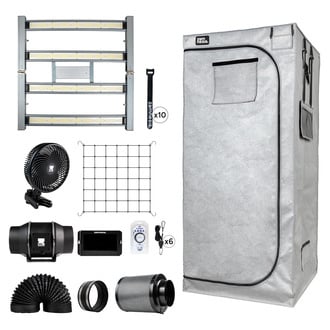
Resist the upgrade spiral and buy the boring essentials first. A light-proof tent sized to your room, a full-spectrum LED matched to that footprint, an exhaust fan with a carbon filter for smell, a small circulating fan, a timer, and a thermometer-hygrometer so you are adjusting to readings instead of guesses. Soil and a simple two-bottle nutrient line beat the most expensive system in beginner hands. Our growshop range covers each of these categories, and buying the kit before the seeds is the correct order.
If you go outdoor: timing and discretion
Outdoors, timing is the technique. Start seeds after the last frost, harden seedlings off to direct sun gradually, and count backwards from your area's first autumn frost to pick varieties that finish in time. Large fabric pots beat open ground for beginners: they drain well, move under cover when storms come, and keep neighbours' questions down. Discretion is part of the method everywhere, legal market or not, because flowering plants smell farther than new growers expect. One big plant in the wrong sightline causes more trouble than three small ones nobody notices.
Whichever route you take, the seed decision comes first and our autoflower versus feminized guide plus our seed-buying mistakes guide will save you the two most common regrets. Fresh Canna sells seeds as collectibles and souvenirs to adults of legal purchasing age, 21+ where we ship, and germination may be illegal where you live. Start low and go slow, never drive or operate machinery, keep everything locked away from children and pets, and speak to a doctor first if you are pregnant, breastfeeding or taking medication.
These statements have not been evaluated by any medicines agency. Products are not intended to diagnose, treat, cure or prevent any disease. Keep out of reach of children. Use only where lawful.